
Watch the film: LED wall or separate screens for your Obeya room?
LED wall or 9 screens? Do not buy yet. What to choose for the meeting room, and why. Press play: the film runs 24 seconds, with a voice-over and the key words on screen.
What does the film say?
In 24 seconds the voice-over makes one case: lED wall or 9 screens? Do not buy yet. Three short points carry it, each one small enough to remember at the wall:
- Separate screens, one topic each.
- An LED wall suits big groups and demos.
- What does your team do in there?
The closing thought: start with the work, not the technology. It is the line to keep when everything else fades.
The idea behind the film
The film is the short version of the article LED wall or separate screens for your Obeya room?. Here is the thinking it is cut from.
For your Obeya room or war room, choose separate standing screens if you want to start flexibly and show a different topic on each screen, and choose an LED wall if you want a large, seamless picture for big groups and presentations. Both run the same Control Room; the difference is in the room, the picture and what you want to do.
Whoever wants to set up a meeting room for an Obeya or control room sooner or later comes to the question: an LED wall or separate screens? An honest answer starts not with the technology, but with what the team does in the room. CoVince describes three set-ups; the LED wall is one of them.
With separate screens each screen has its own topic. A name per screen, such as Goals, Progress, Actions or Risks, means the team walks along the wall screen by screen. That fits the rhythm of an Obeya: the stand-up goes along the walls and everyone is at the same part.
With an LED wall each wall is one seamless picture. Charts, the canvas and the CrewMate become so big that you stand in the middle of them. That is strongest when many people have to see the same picture at once: a steering group, a presentation, a demo.
What holds for all set-ups: the board, the actions, the CrewMate and the video calling work the same. So you can start small and replace the set-up later without redoing the work. A nice screen does not solve a stalling stand-up; the rhythm does.
What the full article covers
- The three set-ups
- Why separate standing screens?
- Why an LED wall?
- How do you choose?
- What the room itself asks for
- Starting small counts
Keep exploring
Choosing a solution for your own wall? Read the guide Obeya software, or go back to the digital Obeya with CoVince. Prefer to keep watching? The films below take the same approach to the neighbouring questions.
Frequently asked questions
What is this film about?
LED wall or 9 screens? Do not buy yet. Separate screens, one topic each. An LED wall suits big groups and demos. What does your team do in there?
How long is the film, and is there sound?
The film runs 24 seconds in a vertical format. It has an English voice-over and the key words on screen, so it also works with the sound off.
Where can I read more about this?
In the article “LED wall or separate screens for your Obeya room?”: What to choose for the meeting room, and why.
What is the difference between an LED wall and separate screens?
An LED wall is one seamless picture per wall, without bezels. Separate standing screens each have a topic and a name of their own. Both run the same Control Room.
 Control room software: a live command center wall
 Crisis room or war room setup: one live picture
 War room setup
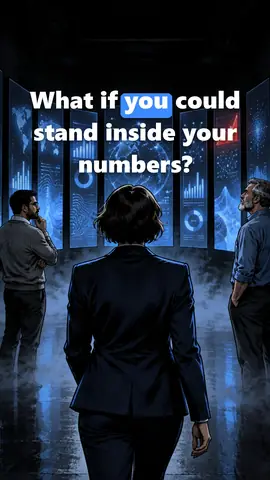 Immersive Obeya room: nine screens, one live wall