
Watch the film: Obeya in manufacturing
Toyota's oldest trick still beats your ERP. Back to the Toyota roots, with live numbers from the shop floor. Press play: the film runs 23 seconds, with a voice-over and the key words on screen.
What does the film say?
In 23 seconds the voice-over makes one case: toyota's oldest trick still beats your ERP. Three short points carry it, each one small enough to remember at the wall:
- It began with everything visible on walls.
- The hard part is upkeep.
- Numbers from the floor. Scrap is up. Why?
The closing thought: the challenge is not the idea. It is the upkeep. It is the line to keep when everything else fades.
The idea behind the film
The film is the short version of the article Obeya in manufacturing. Here is the thinking it is cut from.
The Obeya comes from industry: Toyota used it in the 1990s in developing the first Prius. In manufacturing it is about numbers from the shop floor, problems at the place of the work and short, fixed moments in front of the wall. A digital Obeya keeps that wall today’s, instead of last week’s.
Obeya (大部屋) is Japanese for ‘big room’. In developing the first Prius, the chief engineer and the teams from all departments worked in one room, with everything about the project visible on the walls. It has since become an established lean method, in industry and beyond. Whoever works in manufacturing already knows the habits that go with it: visual management, short stand-ups and solving problems where they arise.
So the challenge in manufacturing is not the idea, but the upkeep. A printed chart is out of date before the marker is dry. Whoever maintains a wall of printouts loses an afternoon every week refreshing it, and the numbers lag behind anyway.
In a digital Obeya the tiles take their numbers from CoVince, from a CSV or from a connected source. What you cannot connect, you type in. The wall is therefore always today’s, and nobody has to print any more. Which sources suit your factory, we go through together.
Tap a tile and you see the trend per week, against the target. That is what the stand-up needs: not only that a number is red, but whether it is an outlier or a trend.
What the full article covers
- Where it began
- Which walls in manufacturing
- Numbers that refresh themselves
- The rhythm in front of the wall
- Solving problems, not only reporting them
- On the shop floor and in the room
- How to begin
Keep exploring
Choosing a solution for your own wall? Read the guide Obeya software, or go back to the digital Obeya with CoVince. Prefer to keep watching? The films below take the same approach to the neighbouring questions.
Frequently asked questions
What is this film about?
Toyota's oldest trick still beats your ERP. It began with everything visible on walls. The hard part is upkeep. Numbers from the floor. Scrap is up. Why?
How long is the film, and is there sound?
The film runs 23 seconds in a vertical format. It has an English voice-over and the key words on screen, so it also works with the sound off.
Where can I read more about this?
In the article “Obeya in manufacturing”: Back to the Toyota roots, with live numbers from the shop floor.
What is the connection between Obeya and Toyota?
Toyota used the Obeya in the 1990s in developing the first Prius: the chief engineer and the teams from all departments worked in one room, with everything visible on the walls.
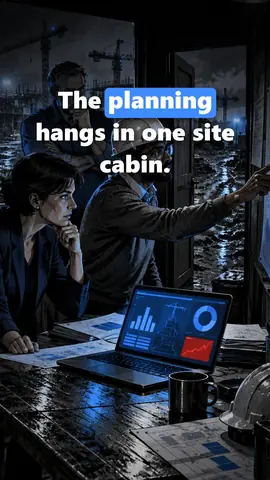 Obeya in construction and infrastructure
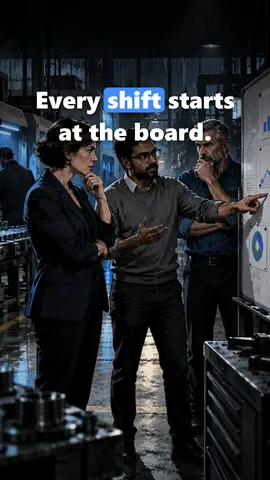 Digital shopfloor management and the digital Obeya
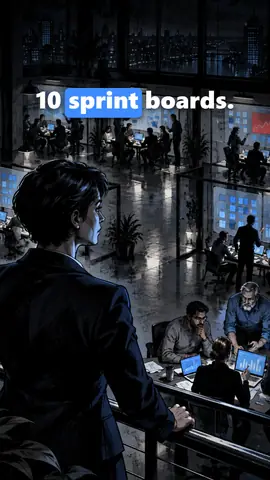 Obeya for IT and agile teams
 Obeya in education