Mindmaps were popularized by Tony Buzan, a British psychologist, in the 1960s.
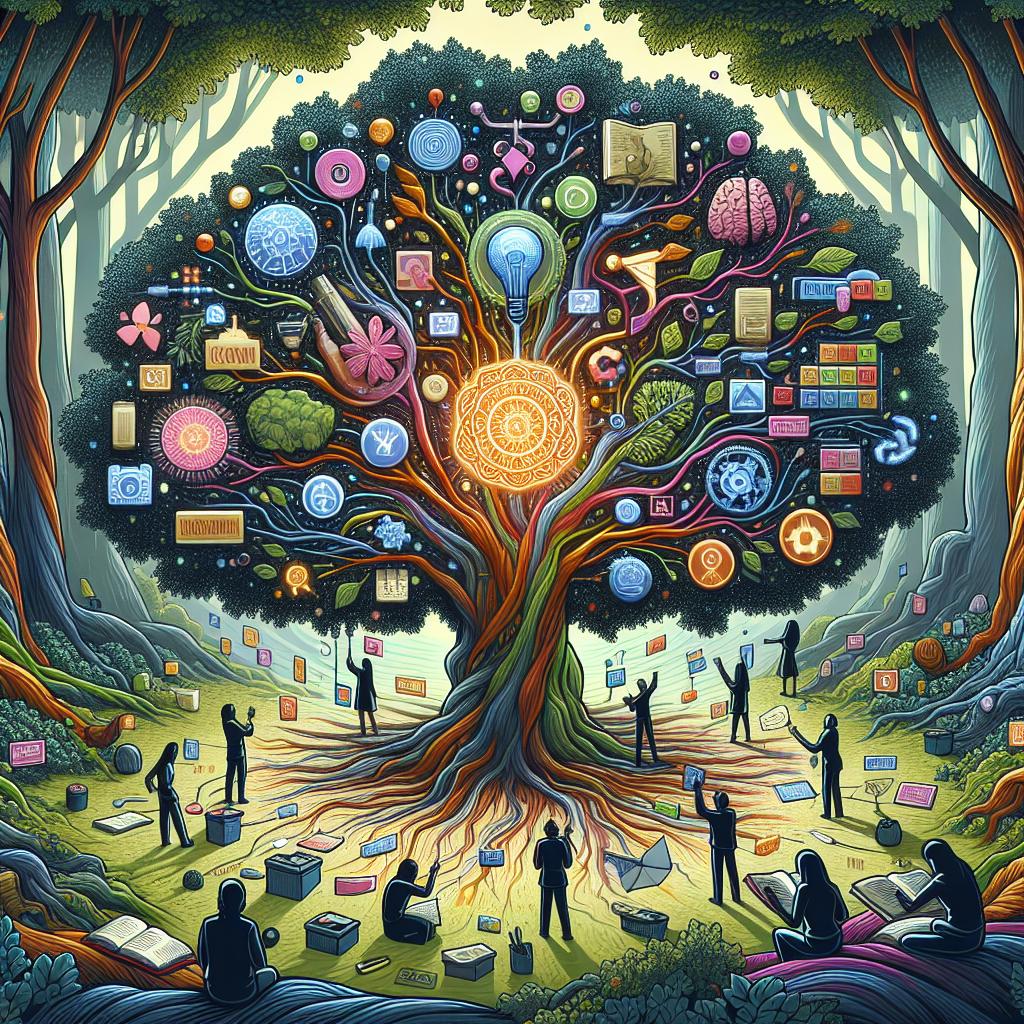
Mindmaps use colors, images, and keywords to stimulate creative thinking.
They promote better understanding and recall of information.
Mindmaps help improve memory and retention.
They aid in generating new ideas and connections.
Mindmaps enhance organization and structure of information.
They provide a visual overview of complex topics.
Start by choosing a central topic or idea.
Write it down in the center of a blank page or digital canvas.
Identify major subtopics or categories related to the central idea and draw branches outwards.
Add keywords or short phrases to each branch to represent specific concepts.
Further expand each subtopic with additional branches and associated keywords.
Use colors, images, and icons to make the mindmap visually appealing and memorable.
Connect related ideas or concepts using lines or arrows.
Mindmaps are often used as a visual thinking tool.
They can be created using pen and paper or specialized software.
Collaborative mindmapping allows multiple users to contribute and collaborate in real-time.