
Watch the film: Obeya in local government and the public sector
Your steering group reads 12 reports a month. Programme steering across departments, hybrid by default. Press play: the film runs 19 seconds, with a voice-over and the key words on screen.
What does the film say?
In 19 seconds the voice-over makes one case: your steering group reads 12 reports a month. Three short points carry it, each one small enough to remember at the wall:
- By then the numbers are weeks old.
- Look at one wall together.
- Dependencies get an owner and a date.
The closing thought: do not report to the steering group. Look at the wall together. It is the line to keep when everything else fades.
The idea behind the film
The film is the short version of the article Obeya in local government and the public sector. Here is the thinking it is cut from.
An Obeya at a municipality or other public organisation is a shared wall for a programme that runs through several departments. Goals, numbers, planning and risks are in one place, and actions have an owner and a date. Because civil servants work spread out and partly from home, a digital, hybrid Obeya is here rather the standard than the exception.
Think of a programme such as the energy transition in a neighbourhood, the introduction of a new law or the renewal of customer contact. It touches spatial planning, the social domain, IT, communication and finance. Each department has its own planning and its own reporting, and the programme manager lays the documents side by side every month. By the time the steering group sees the numbers, they are a few weeks old.
An Obeya turns that around. Instead of reporting to the steering group, the team looks together at the same wall every week. What is behind is discussed straight away, and the action gets an owner.
The CoVince Obeya has four walls. This is how you can fill them for a public-sector programme, as an example:
Those are examples of topics. The numbers themselves you take from your own sources: from CoVince, from a CSV, from a connected source, or you type them in.
At a public organisation programme members sit in different offices, at partners or at home. A paper wall in one room excludes those people. A digital Obeya lets them look along and talk along on the same wall. Video calling is part of CoVince itself, next to the board, and you can show the Control Room or the canvas in the conversation: everyone sees at once what changes.
What the full article covers
- The problem: a programme without a shared picture
- Which walls suit a programme
- Hybrid by default
- The rhythm: short and fixed
- Actions that do not disappear
- What to watch for
- A first step
Keep exploring
Choosing a solution for your own wall? Read the guide Obeya software, or go back to the digital Obeya with CoVince. Prefer to keep watching? The films below take the same approach to the neighbouring questions.
Frequently asked questions
What is this film about?
Your steering group reads 12 reports a month. By then the numbers are weeks old. Look at one wall together. Dependencies get an owner and a date.
How long is the film, and is there sound?
The film runs 19 seconds in a vertical format. It has an English voice-over and the key words on screen, so it also works with the sound off.
Where can I read more about this?
In the article “Obeya in local government and the public sector”: Programme steering across departments, hybrid by default.
Does an Obeya suit a municipality?
Yes, especially for programmes that run through several departments. The wall puts goals, numbers, planning and risks in one place, and actions get an owner and a date.
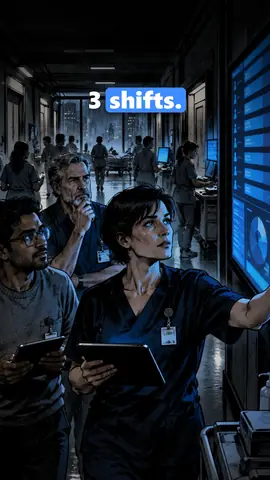 Obeya in healthcare
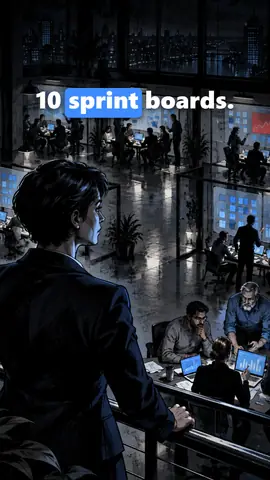 Obeya for IT and agile teams
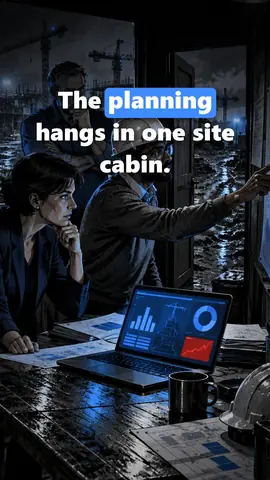 Obeya in construction and infrastructure
 Obeya in manufacturing