
A working life is about 80,000 hours. Four thousand of them go to retyping something that already existed.
CoVince
scroll
 CoVince

The same colleague exists in eleven systems, spelled three ways. The document is in one cloud and the project in another. Nobody set out to build this; it arrived one sensible purchase at a time, and now somebody spends their morning carrying data between things that were each supposed to save them time.
She has typed the same address into four screens before her coffee is cold.

It was a good meeting. Everyone agreed. And a week later nobody can say exactly what was decided, because the call ended and took the conversation with it — the notes are in a chat, the actions were never written down, and the same eight people will meet again on Thursday to have most of it a second time.
The same is true of a club, a ward and a street. It is never the organisation that knows the thing. It is Ans, and Ans is retiring in March.
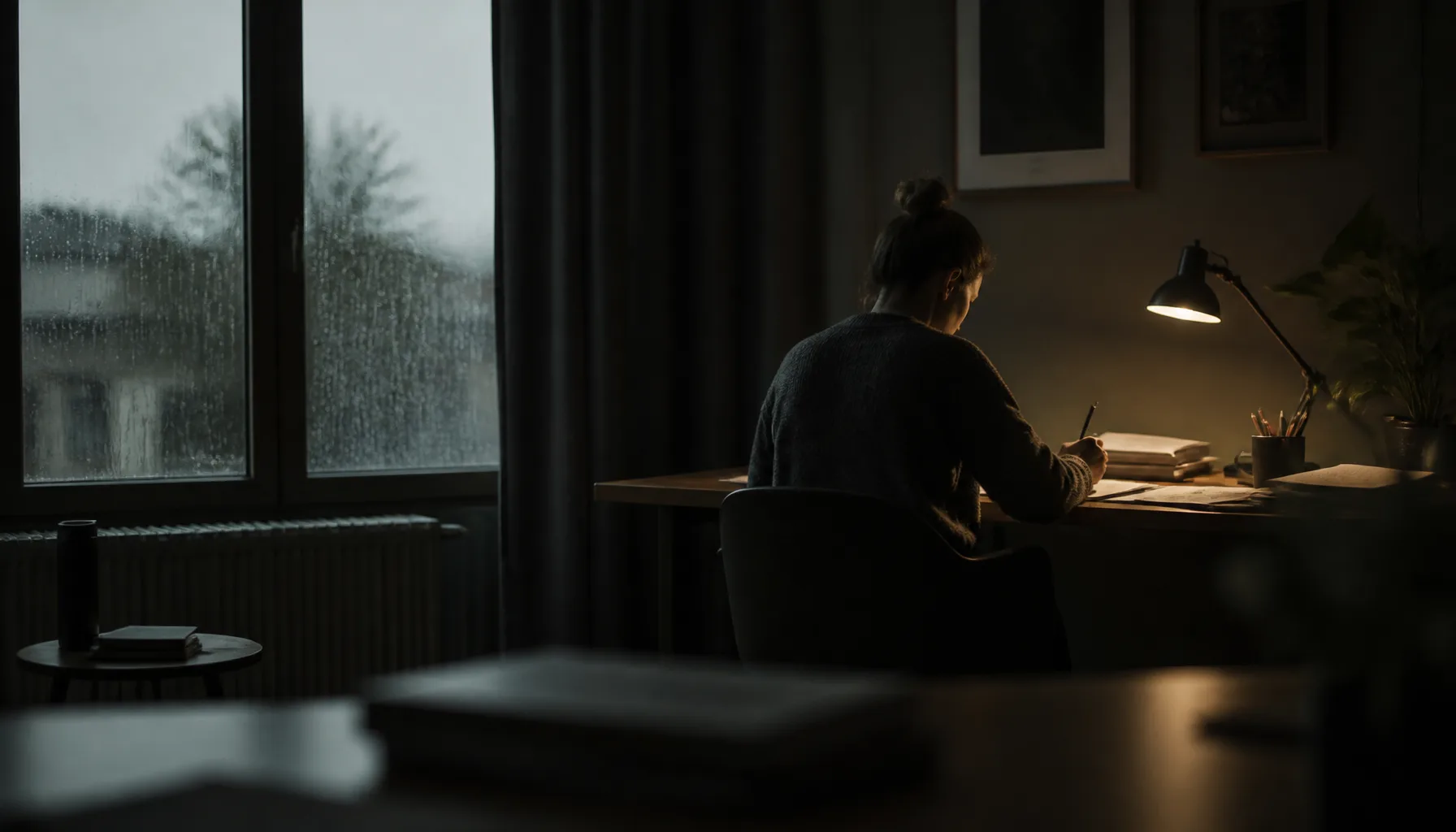
This is who pays. Not the software budget — the people. Everything shipped, everyone was busy, and in December the same people know roughly the same things they knew in January. Not because they did not want to learn. Because every hour that could have gone into getting better went into keeping the machinery fed.
Seventeen tools were involved. They were not the reason. They were the tax.
Nobody chose this. Everybody does it.
And it is on no invoice.
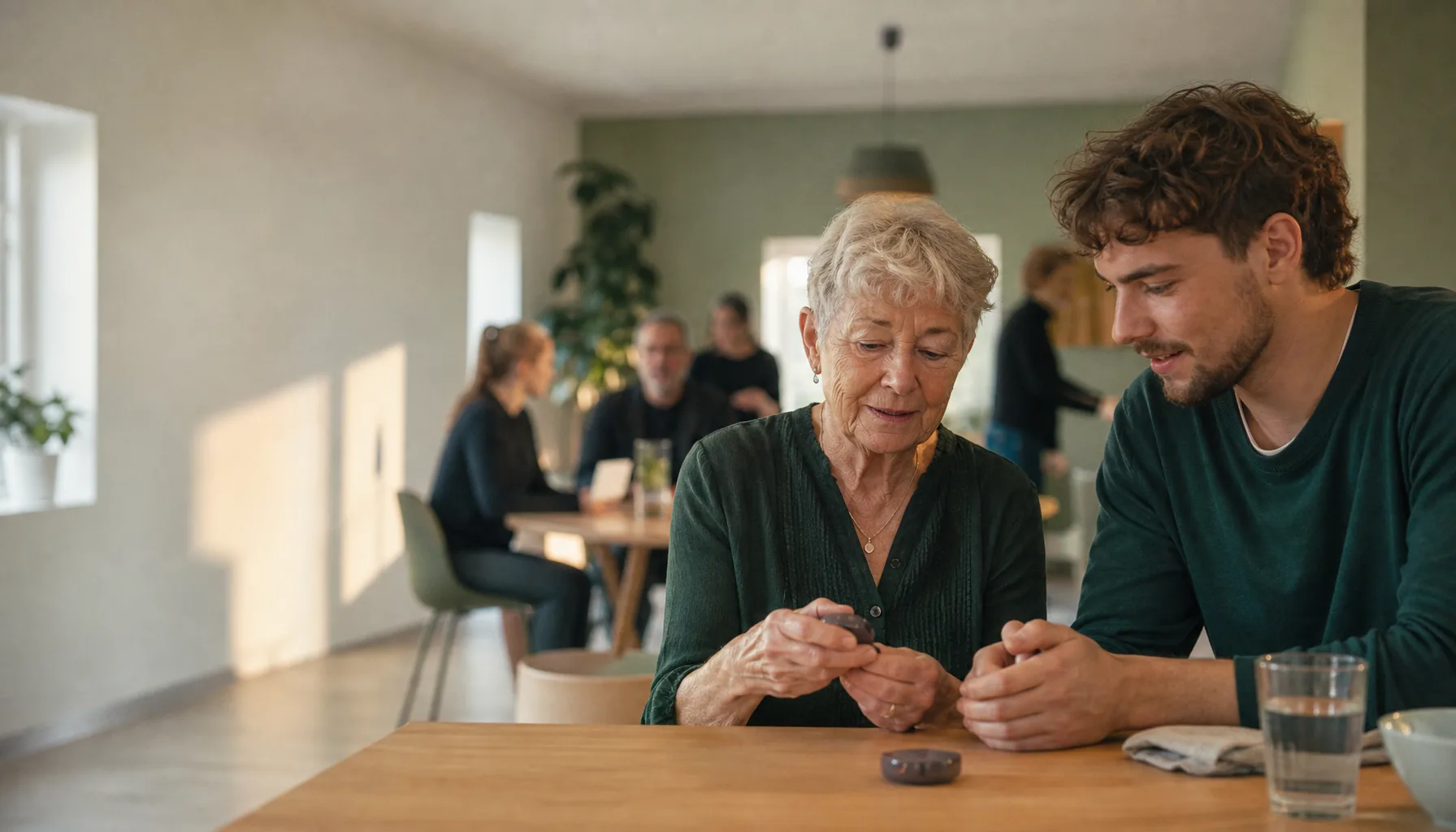
But we can send them somewhere better. What if that time went to being with people instead of systems — to exploring something nobody has asked for yet, to trying the thing that turns out to be worth more than everything on the invoice? Co: together. Vince: to grow. Everybody grows, not only at work and not only the people somebody is paying. A platform cannot do that for you. It can stop being the reason it does not happen.
The brain does not store what you were told. It stores what you saw, heard, did and felt, bound into one cluster — and how strongly it felt decides whether the cluster is still there next week. A slide asks one sense for ten minutes and then wonders why nothing stuck.
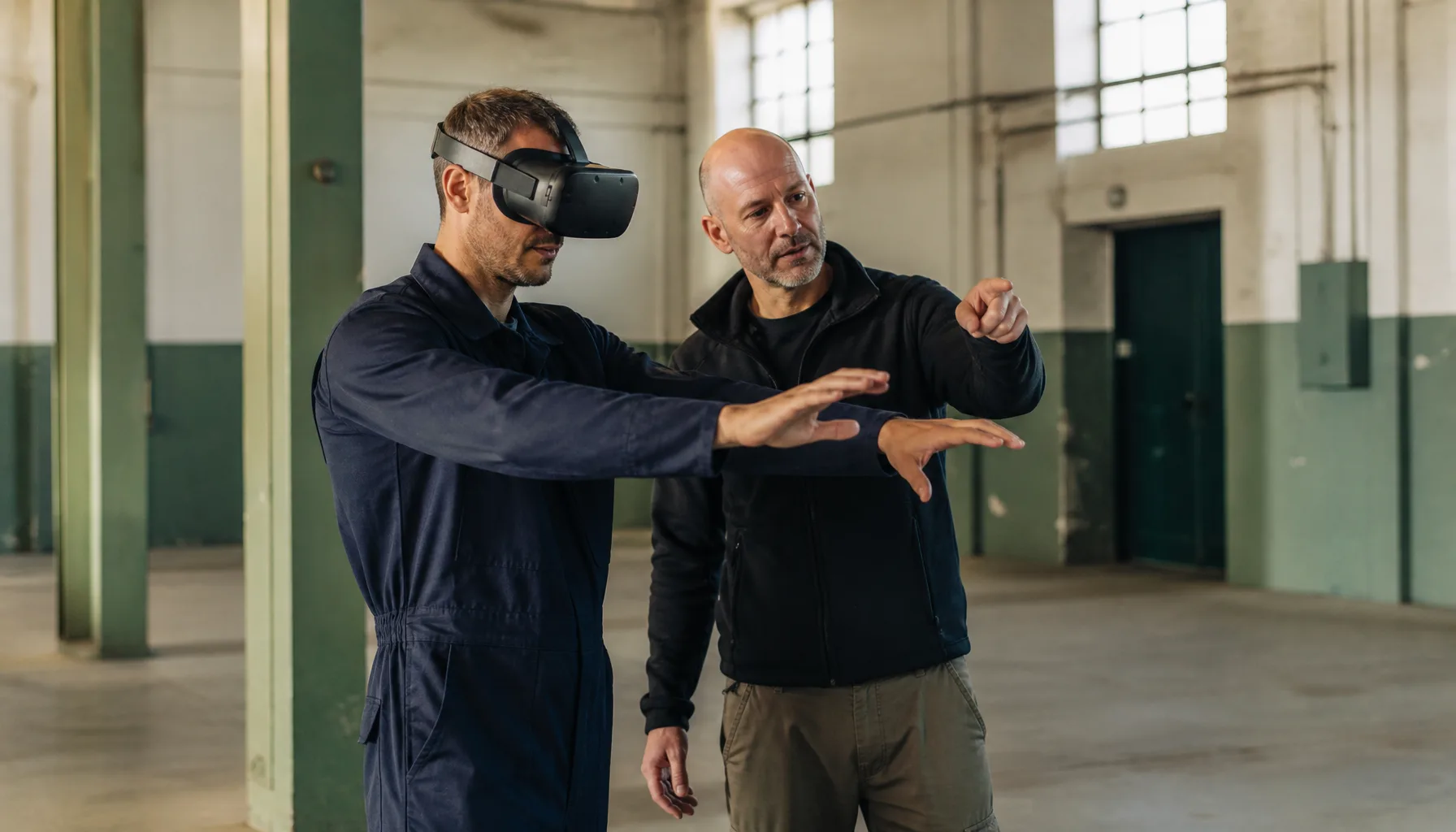 Be somewhere
A 360 or 3D scenario, in your own building if you scanned it. Space and body are two of the senses a slide cannot reach — and the room is what you recall first, months later.
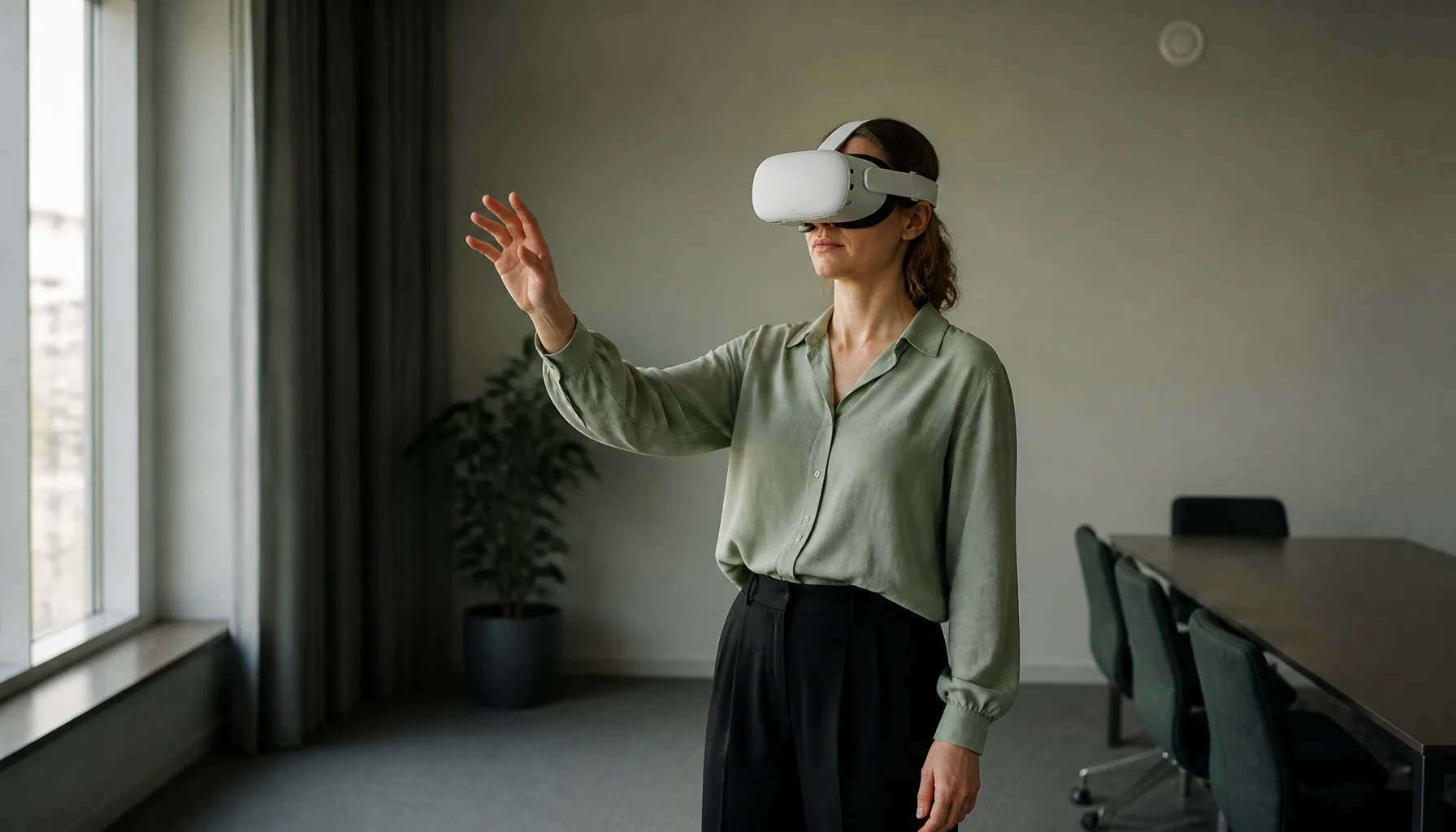 Feel something
Points, badges, a streak, a wheel that decides who goes next. Not decoration: mild stakes are emotional weight, and emotional weight is what the brain uses to decide what to keep.
 Do it with somebody
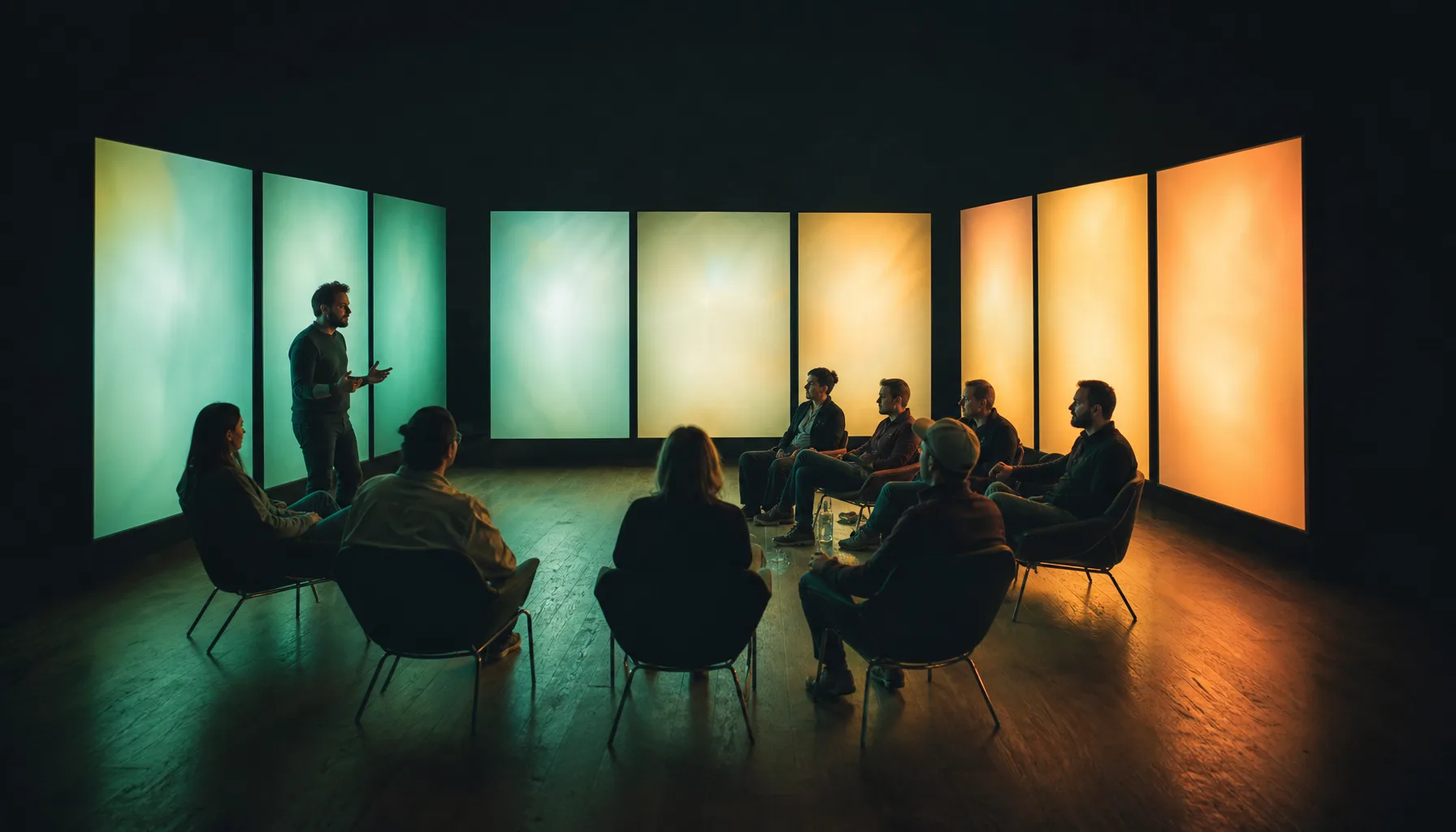
The question asked in front of the group, the answer somebody else gave, the board you built together. Learning with other people attaches a face to the fact, and a face is a very good hook.
Which is why the course is not a video library. It is a place with rooms, people and consequences in it.
Name the thing you are actually trying to do — onboard somebody, run the quarter, launch the campaign, train the night shift — and everything needed to reach it is already attached to it. Nothing to carry between tools, because nothing was ever apart.
The tools never move. Only the middle changes.Which is why learning can sit on the goal too — and why the goal in the middle does not have to be a work goal. Run the season. Get through the treatment. Take care of dad. Same ring.
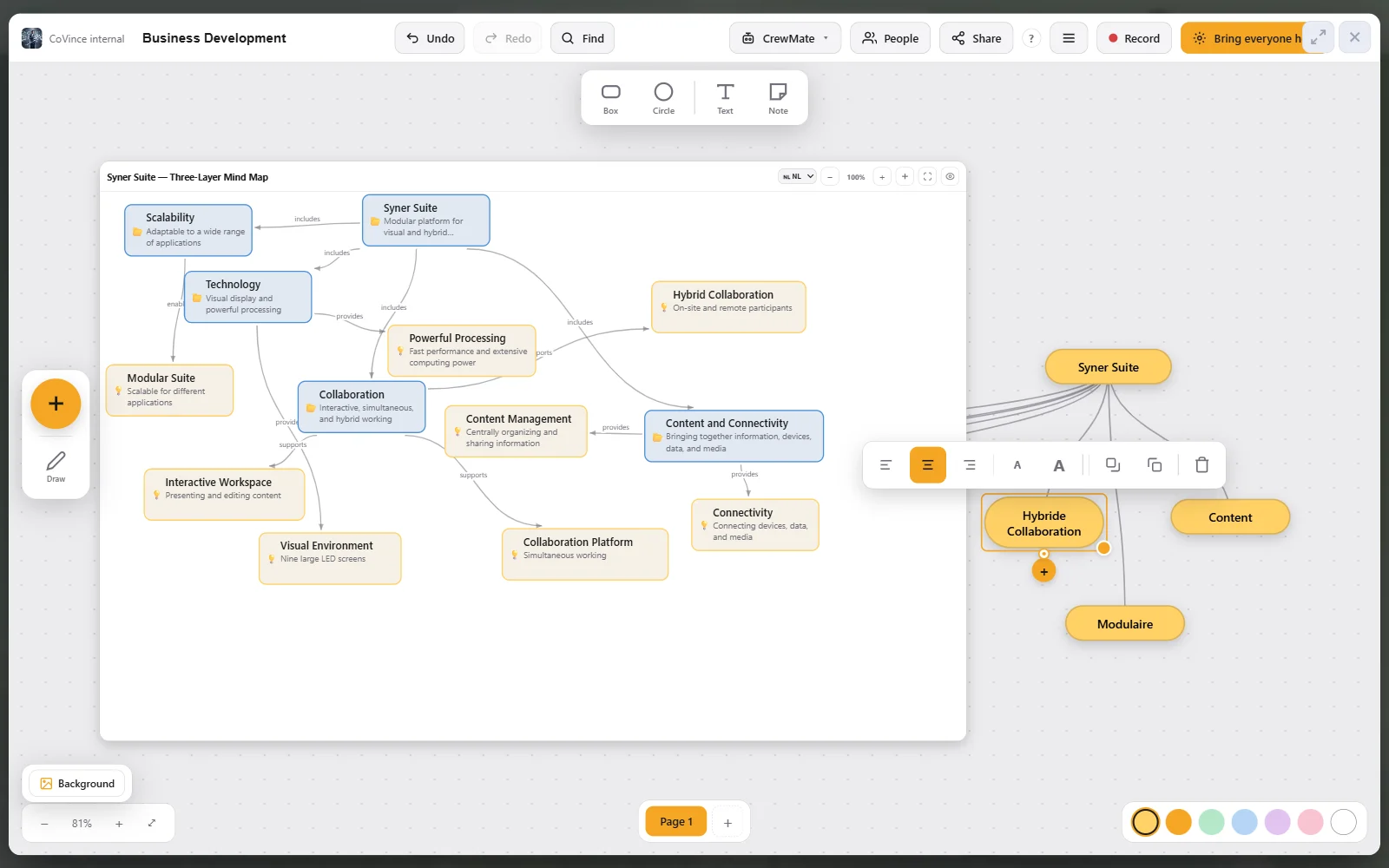
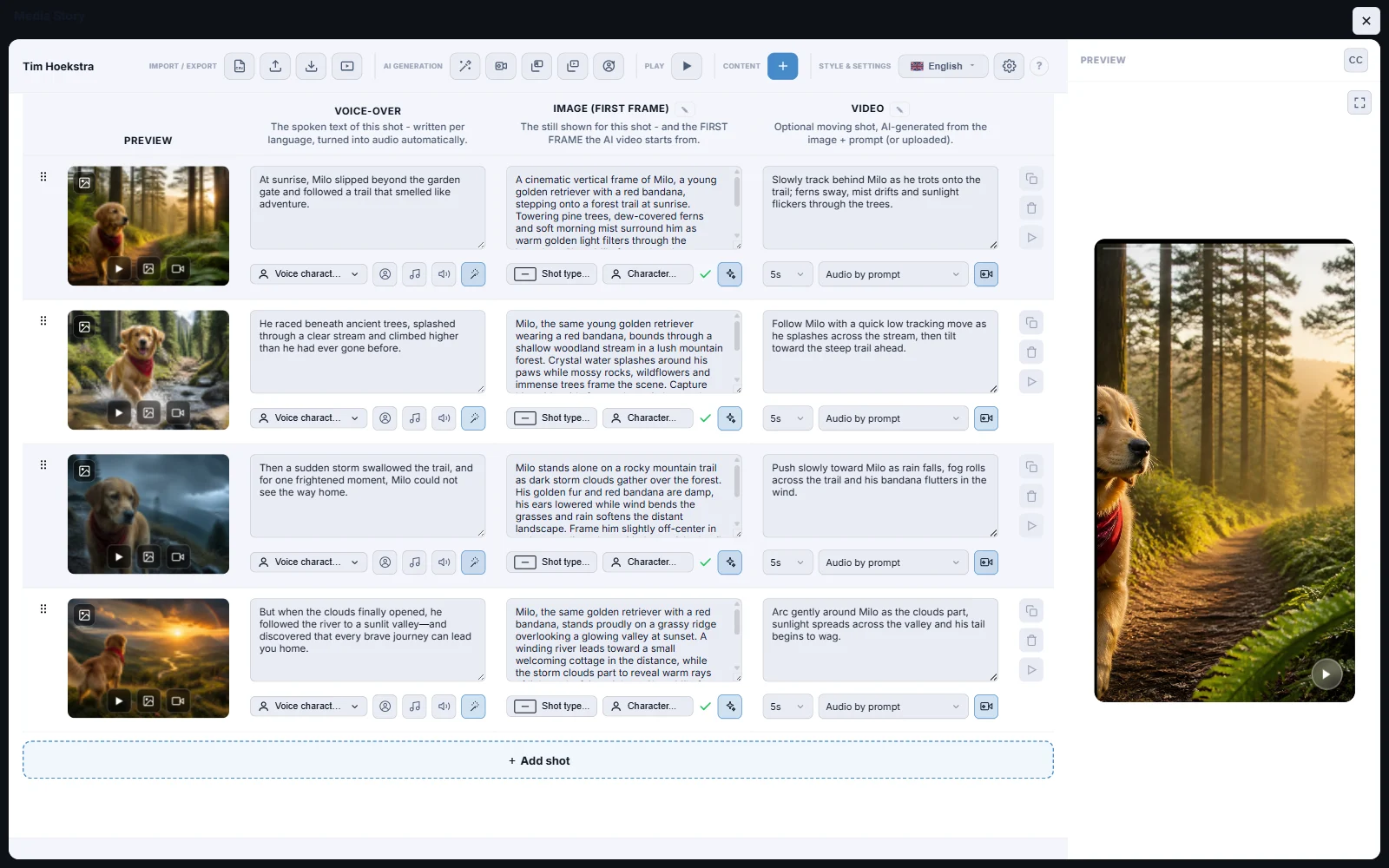
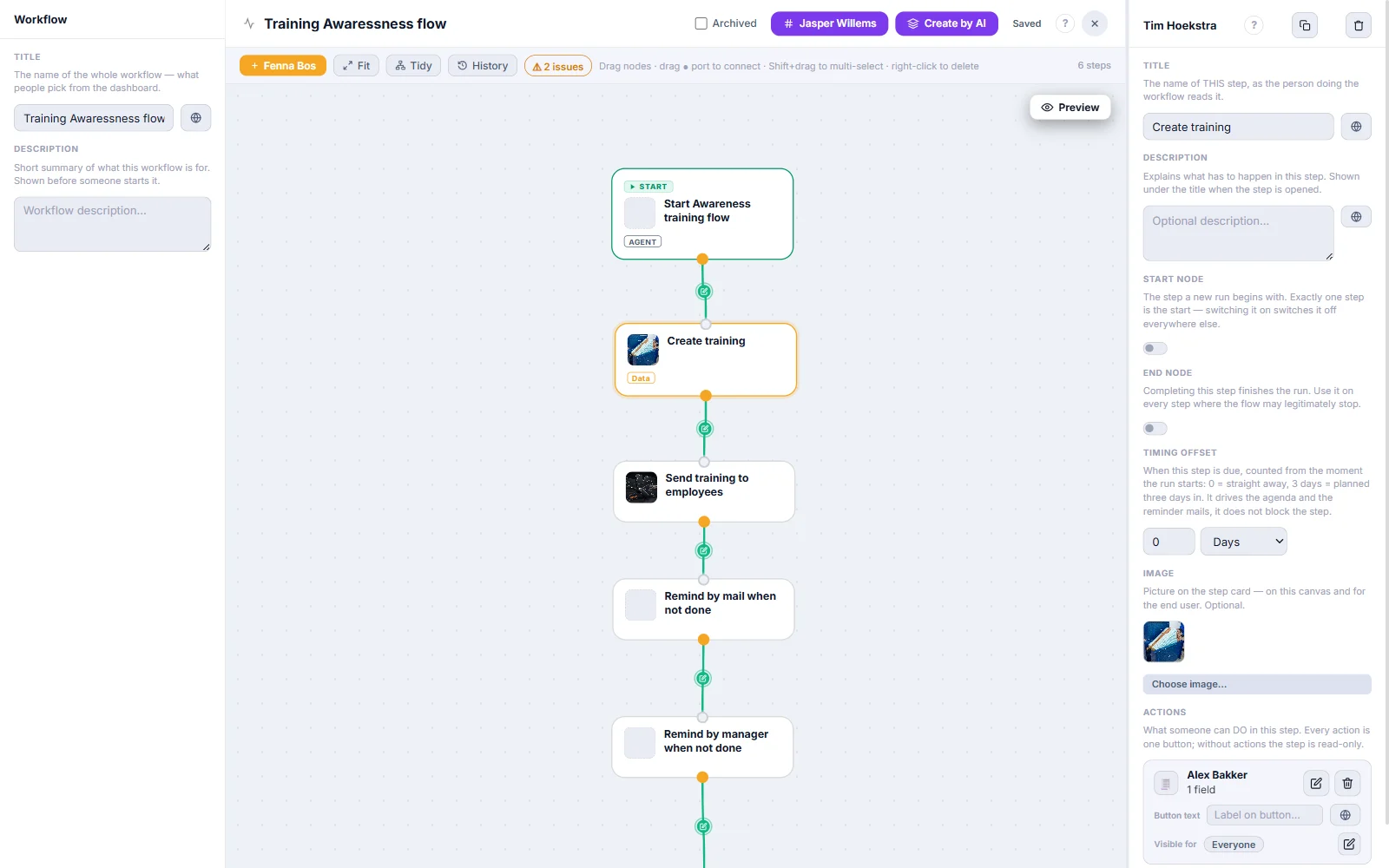
Not a mock-up and not an illustration. These are screens from the running platform, with the names swapped for demo data.
You do not learn after the work.
You learn inside it.
One vendor instead of seventeen. If a tool is the best in the world at one narrow thing, ours is probably not that. You are trading some depth in places for everything sitting in one place, on the same people and the same records — and for a team that can find the work on a Tuesday morning.
tools, seventeen logins, seventeen bills, and a morning a week spent between them.licence — and the chasing, the copying and the reminding done by the system instead of by somebody.
€19 per person per month. The stack it replaces is about €222.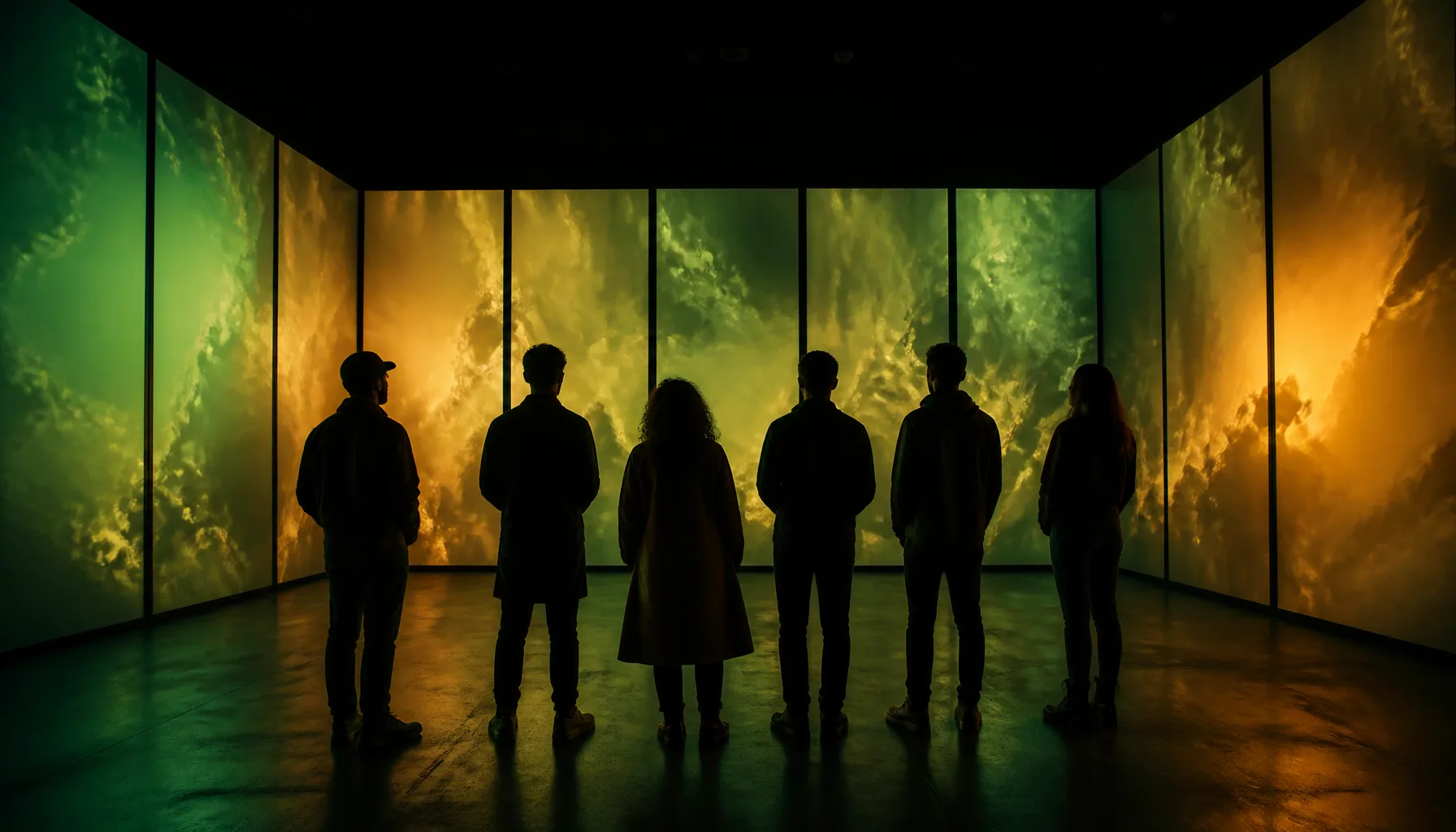
Nine screens in a U, or a headset — same journeys, same people, same data, standing up. A monitor asks one person to look at one thing. A room asks a group to turn their heads and point, which is how anything gets understood together.
Three composites, drawn from how teams actually use it. Not customers, and not pretending to be.
Nothing dramatic happened. The course sat on the task instead of in a portal, the answers stayed where the questions were asked, and she picked up one useful thing a week without ever calling it training. A year of the hours nobody was carrying data around in, spent on her instead.
On Thursday she answers someone else's question. That is the whole system working — and it is the best hour of her week.
Grow yourself
Somebody still has to write it down; that never changes. What changes is where it lands — on the thing it was about, so the fourteenth person starts where the first one finished instead of where they started.
Grow your team
Every role, and the route to it: which skills, which learning, which experience, and who is nearly there already. Capability stops being a feeling somebody has in a meeting and becomes something you can look at.
Grow the organisation
Tomo runs on this platform: an assistant for medical conversations, because you hear a great deal at the doctor and remember very little of it. Same journeys, same people, no employer anywhere in it — a club, a class, a ward, the people around one person. A journey never asks whether you are colleagues.
Technology aimed at work is aimed at a third of a life. The other two thirds have the same problem and less budget.
Everybody grows
One place for the work, the people and what they learn. The rest is detail, and the detail is on the next page.
Open the platform