
Obeya in manufacturing: back to the Toyota roots, with live numbers
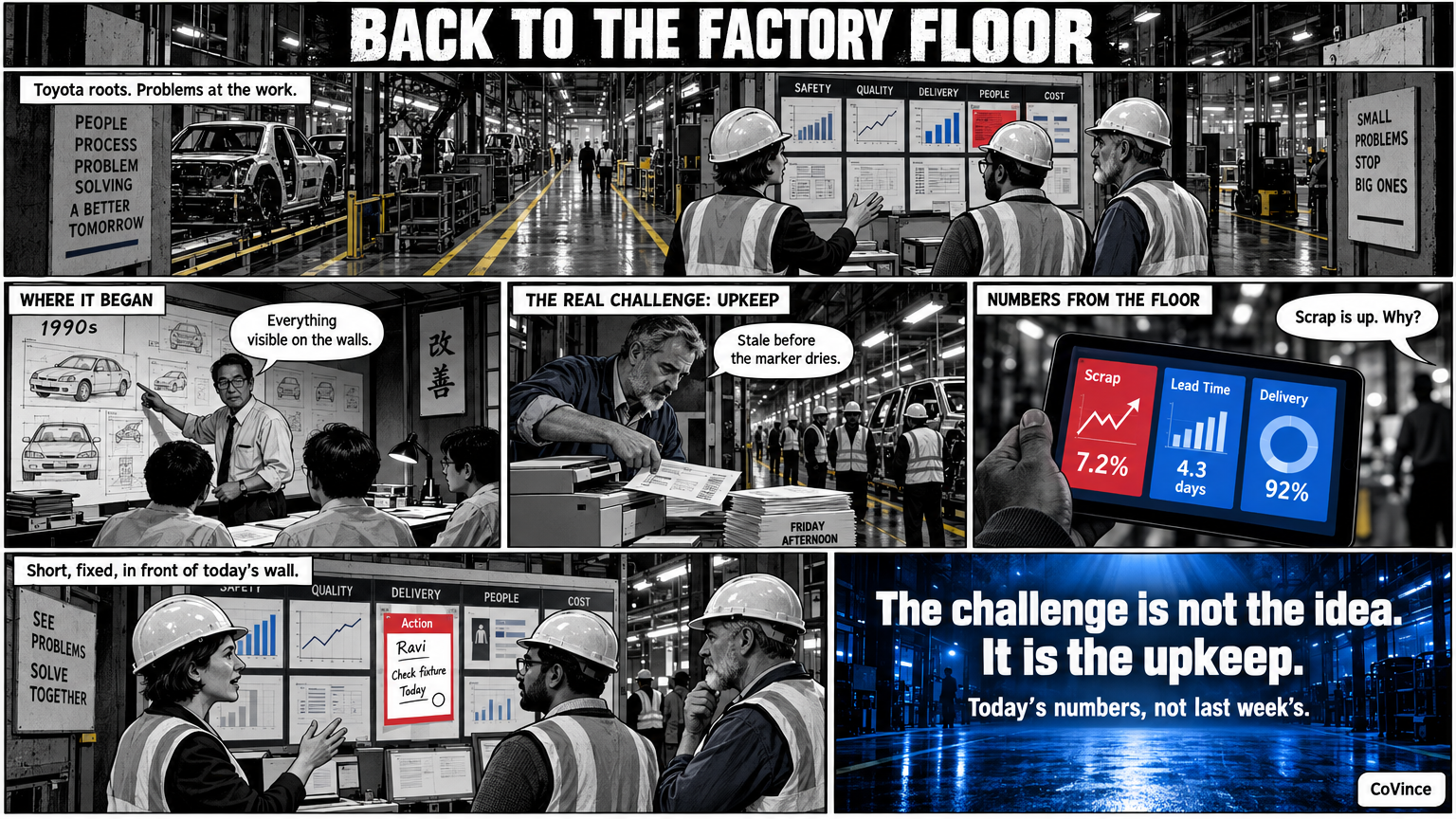
The Obeya comes from industry: Toyota used it in the 1990s in developing the first Prius. In manufacturing it is about numbers from the shop floor, problems at the place of the work and short, fixed moments in front of the wall. A digital Obeya keeps that wall today’s, instead of last week’s.
Where it began
Obeya (大部屋) is Japanese for ‘big room’. In developing the first Prius, the chief engineer and the teams from all departments worked in one room, with everything about the project visible on the walls. It has since become an established lean method, in industry and beyond. Whoever works in manufacturing already knows the habits that go with it: visual management, short stand-ups and solving problems where they arise.
So the challenge in manufacturing is not the idea, but the upkeep. A printed chart is out of date before the marker is dry. Whoever maintains a wall of printouts loses an afternoon every week refreshing it, and the numbers lag behind anyway.
Which walls in manufacturing
- Goals and KPIs: for example scrap, lead time, delivery reliability, safety reports or the staffing of a line. Every measurement with a target and a colour: green, orange or red.
- Plan and milestones: the planning of a line or of the introduction of a new product, with the phases and the milestones.
- Problems and actions: what is not going well, what the cause is as far as known, who does something about it. Every action an owner and a date.
- Decisions and risks: what has been decided, and what can still hit delivery reliability.
Numbers that refresh themselves
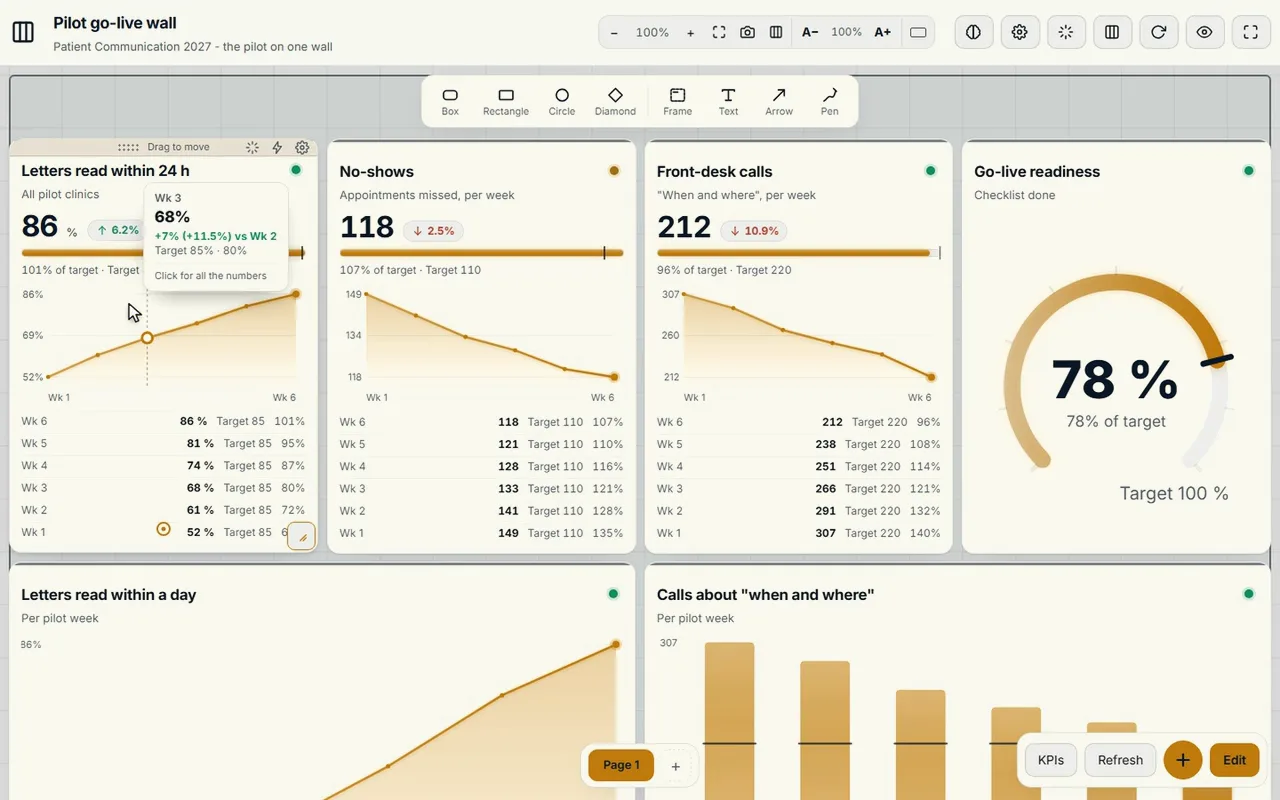
In a digital Obeya the tiles take their numbers from CoVince, from a CSV or from a connected source. What you cannot connect, you type in. The wall is therefore always today’s, and nobody has to print any more. Which sources suit your factory, we go through together.
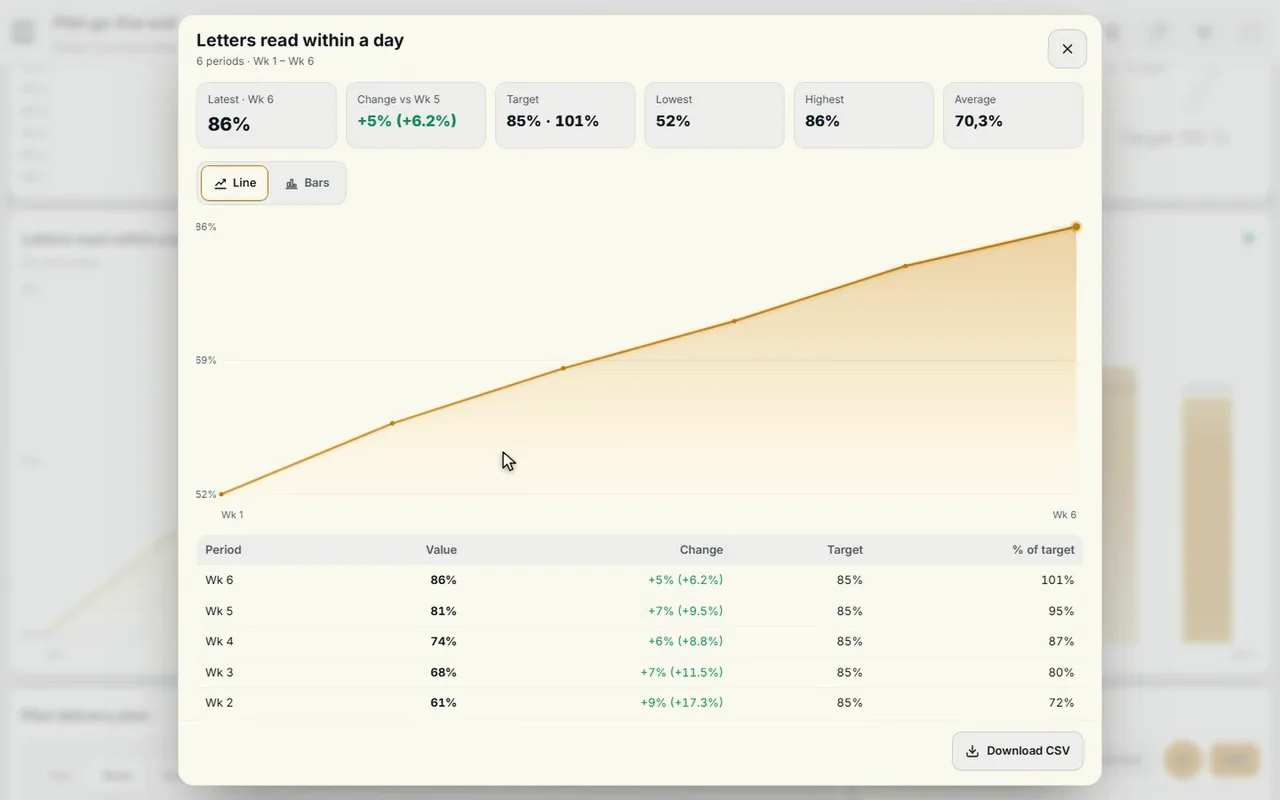
Tap a tile and you see the trend per week, against the target. That is what the stand-up needs: not only that a number is red, but whether it is an outlier or a trend.
The rhythm in front of the wall
An Obeya works through the rhythm, and that rhythm is Deming’s PDCA principle: plan, do, check, act.
- Daily, fifteen minutes, standing: what is red, who picks it up?
- Weekly: walk the walls together: plan, risks and decisions.
- Per period: recalibrate goals and KPIs. Are we still steering on the right things?
The Control Room shows at the top how many numbers are behind, at risk or on track, and how many actions are overdue. For a crew on the shop floor that is the stand-up in a nutshell: go first to what is red.
Solving problems, not only reporting them
Lean is about solving the problem, not about reporting it. In CoVince the action hangs on the board it is about: tap a chart and you see which action is attached to it. For the analysis itself you have the canvas, an infinite board with sticky notes, shapes and arrows. On it you make a problem analysis or an A3 together. See also A3 template for problem solving.
On the shop floor and in the room
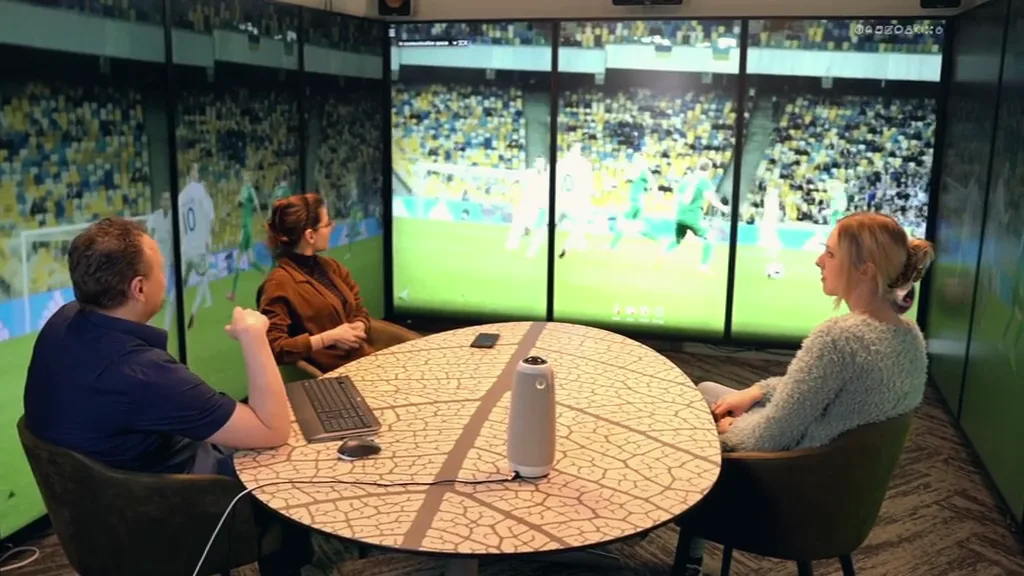
You do not have to choose between the floor and the room. On the shop floor the wall works on one big screen at the line. In the project room you can spread the board over three or nine screens, or put it in the Syner Suite: nine standing 86-inch screens in a U, three per wall. For those not on site, for example the supplier or head office, video calling is part of CoVince itself, next to the board.
How to begin
- Choose one line or one product. Put five to eight KPIs on it, each with a target and an owner.
- Connect what you can, and type in what you cannot yet.
- Hold a fifteen-minute stand-up every day for two weeks, and attach an action to every red KPI.
- Only after that expand to plan, risks and decisions.
For the full method see What is Obeya? The complete guide.
Three things that often go wrong in manufacturing
The wall shows yesterday. A KPI that is updated by hand lags a day, then a week. Connect what you can, and for what has to be done by hand make clear who fills it in when.
Red is a question of blame. If an operator or team leader is afraid of red, it disappears from the numbers. Agree that red is the reason to look together, and that the stand-up starts at the problem, not at the person.
The stand-up takes forty minutes. Then the crew walks out of it. Fifteen minutes, standing, at what is red. For the rest a separate conversation with the people it concerns.
Frequently asked questions
What is the connection between Obeya and Toyota?
Toyota used the Obeya in the 1990s in developing the first Prius: the chief engineer and the teams from all departments worked in one room, with everything visible on the walls.
Why a digital Obeya in manufacturing?
A printed chart is out of date before the marker is dry. Digital tiles take their numbers from CoVince, a CSV or a connected source, so the wall is always today’s.
Can the wall hang on the shop floor?
Yes. A digital Obeya works on a laptop or one big screen, and can also be spread over three or nine screens.
How often do we stand in front of the wall?
A fifteen-minute stand-up daily, weekly the walls together and per period recalibrate the goals and KPIs.
How do you solve a problem on the wall?
Attach an action with owner and date to it, and work out the analysis on the canvas, for example as an A3. The action stays visible until it is done.
How does an Obeya relate to digital shopfloor management?
Both put shop-floor numbers, problems and actions in one visible place and discuss them briefly and often. An Obeya looks beyond a single department. Read digital shopfloor management and the digital Obeya.